
Film or Digital for Your Wedding: Which One to Choose?
It's a question that comes up a lot once you start looking through different photographers' portfolios: some offer an all digital approach, others lean into film, and a few, like me, work with both. Behind this technical choice is really an aesthetic one, and there's no right or wrong answer, only the one that matches what you want to keep from your wedding.
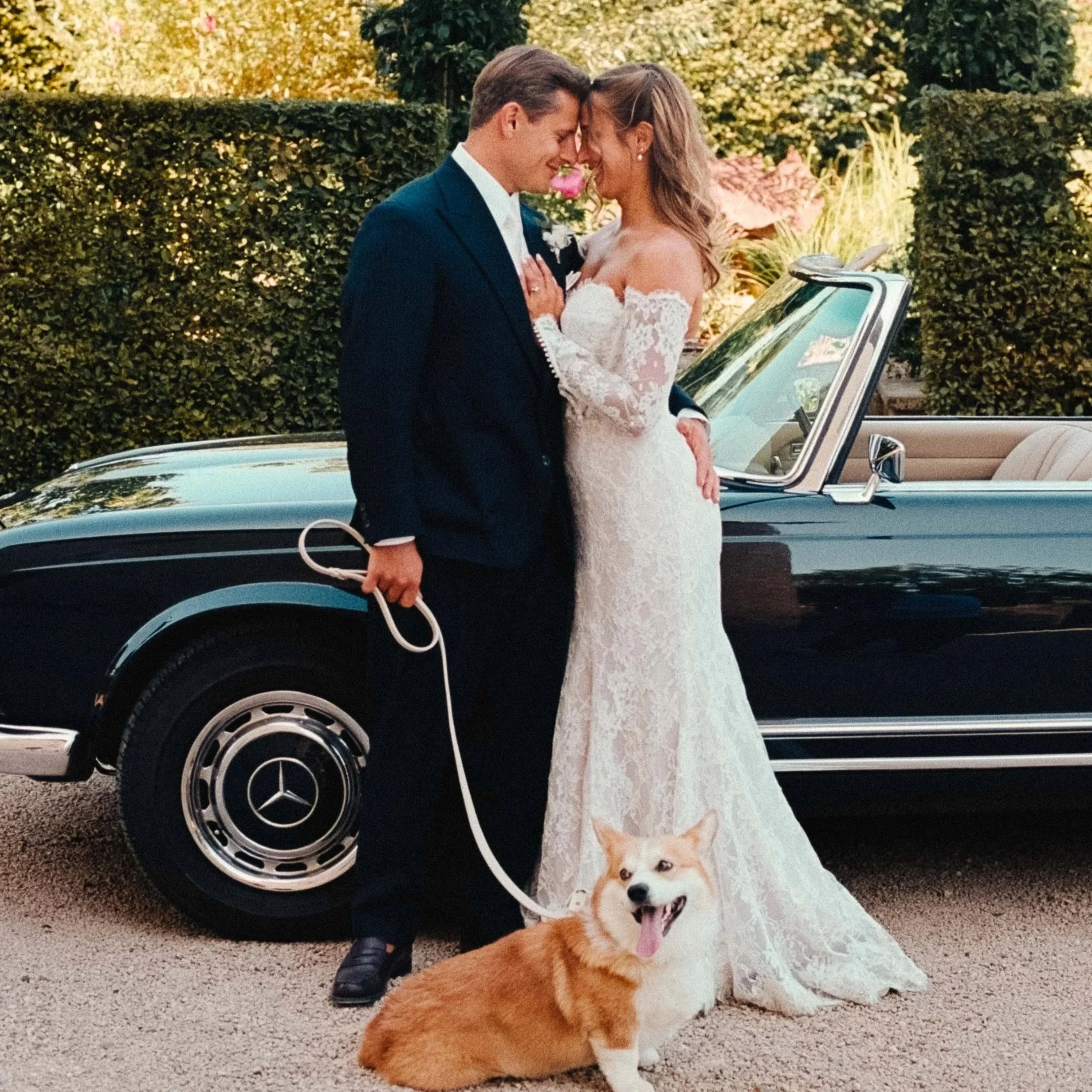
Margaux & Maxence
At Château de Saint Bernard, Beaujolais.
An image from a roll of Kodak Portra 400 film.
The Real Difference, Beyond the Technique
Digital captures a sharp, precise image, with plenty of room to adjust in retouching. It's the most widely used technique today, fast, reliable, and able to cover a huge number of moments in a single day without any real constraints.
Film, on the other hand, captures the image on physical film stock. The look is different right from the moment of capture: natural grain, colors with a texture unique to each type of film, softer handling of light, especially in the highlights, which "burn" organically rather than simply blowing out. It's a look people recognize instinctively, even without being able to explain it technically, many of my clients associate it with old family photos, with their parents' albums.
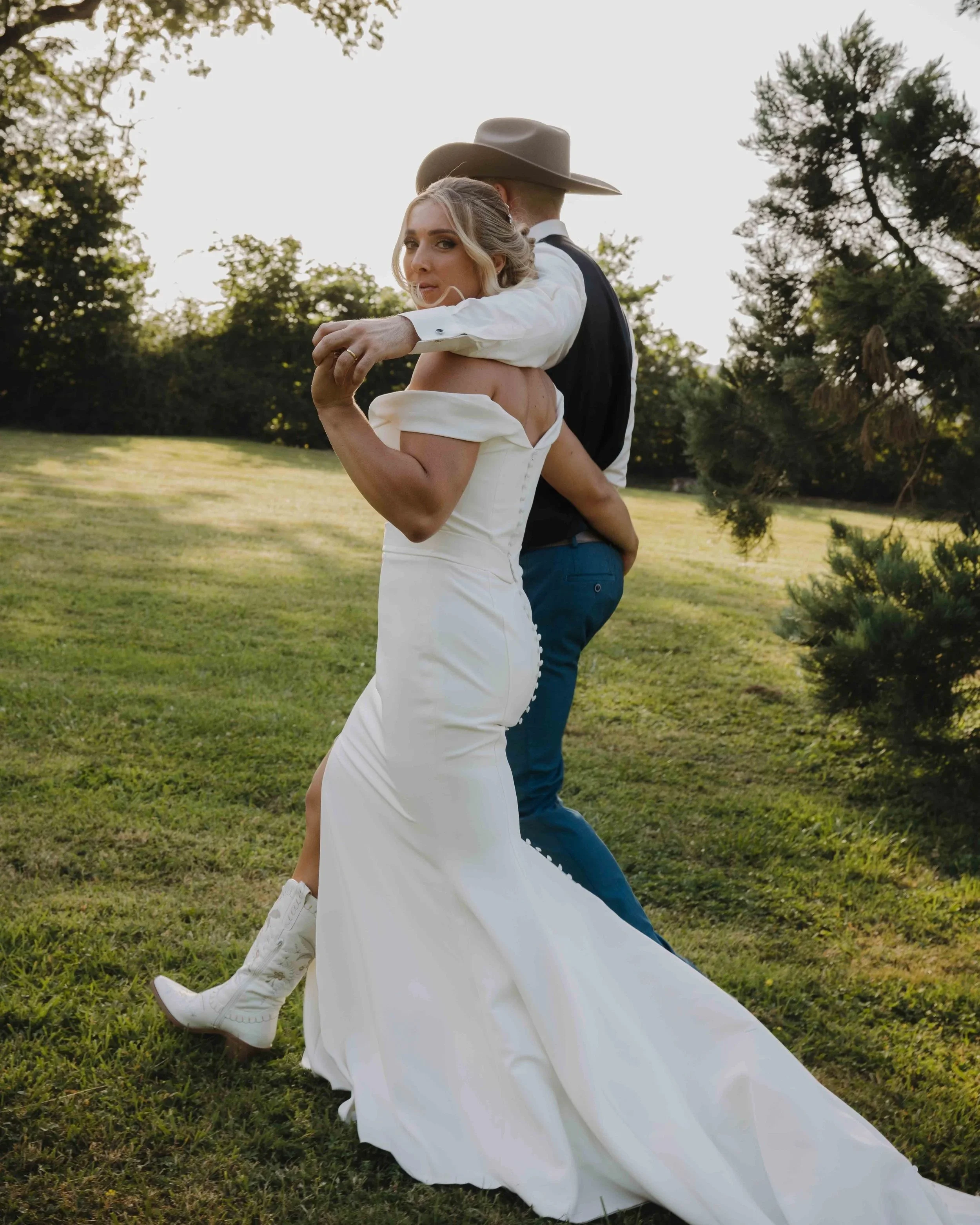
Candice & Thomas
At Château de Charentay, Beaujolais.
An image captured with my Canon R5 and Canon RF 24-70mm 2.8 lens.
Why Some Photographers Use Both ?
Digital and film aren't mutually exclusive, they each serve different needs within the same wedding day.
Digital is irreplaceable for moments that demand quick reflexes: the ceremony, entrances, the once only instants where you need to be certain you've captured the right shot at the right moment, without having to wait for a roll of film to be developed to find out if it's sharp.
Film, on the other hand, really comes into its own during quieter, more deliberate moments: getting ready, couple portraits, times when things can slow down. That's where it brings that distinctive texture, the kind that sets apart a series of photos that are simply "beautiful" from a series that has real soul.
In practice, I photograph most of the wedding digitally, for reliability and full coverage, and bring in film for select moments, often getting ready and portraits, to give your final gallery that mix of precision and texture that, I believe, tells the story of the day better than either technique on its own.
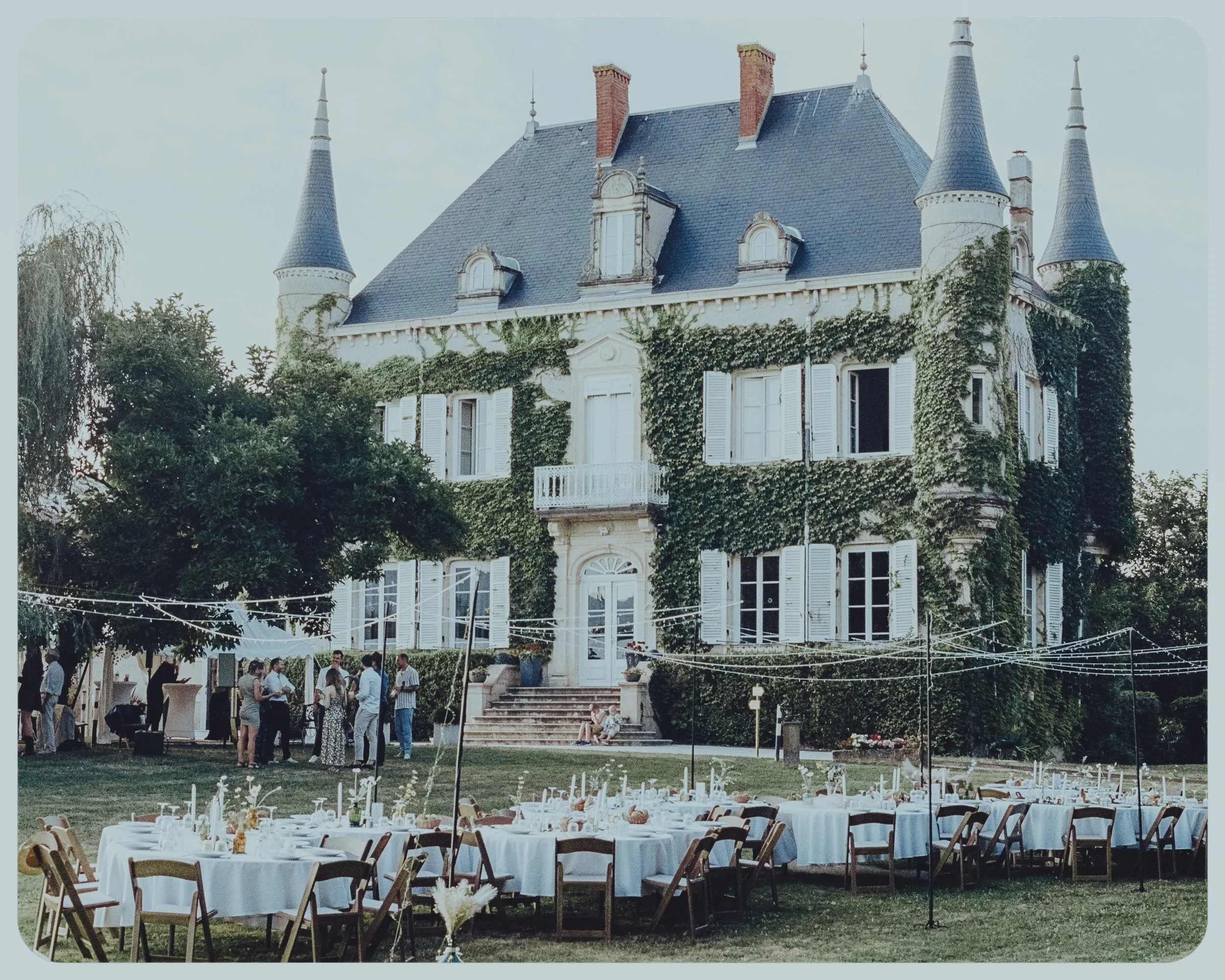
Château du Grand Vernay in the Beaujolais, just a few kilometers from Lyon.
Does Film Cost More or Take Longer?
Yes, on both of these points, and it's worth knowing that going in.
Cost: every roll of film has a price tag, purchase, developing, and lab scanning, unlike digital, where the material cost is nearly nonexistent once the equipment is paid off. This is partly why a package that includes film tends to run a bit higher than an all digital service.
Turnaround time: digital photos can be sorted and retouched quickly after the wedding. Film photos, on the other hand, depend on a lab for developing and scanning, which adds several extra weeks before those images can join the rest of your gallery. This is worth keeping in mind if you have a specific deadline, for a thank you card, for example.
So, Which One Should You Choose?
If you don't have a particular attachment to one or the other, the real question isn't "film or digital", it's whether the photographer's overall style genuinely moves you when you look through their work.
A photographer who's genuinely skilled in both techniques, and knows exactly where to use each one, will usually bring more richness to your gallery than an either or choice. That's the approach I stand behind: using whichever tool best serves each moment, rather than forcing a single aesthetic onto a day that's actually made up of very different moments, one from the next.
You're planning your wedding and would like a personalized quote? Let's talk about your project.